
Orthodontics / Invisible / Clear Braces

We have an experienced team of orthodontists who help u achieve the best smile possible with different options of braces. Find out which option is the best for your case by getting in touch with us. Lingual as well as Invisible braces also done.
Normally the orthodontic treatment is begun between the ages 10 and 14. This is when a child’s head and mouth are still growing and teeth are easier to straighten, treatment duration will be 8 months to 16 months based upon the severity of the condition. Certain jaw growth problems can be handled simply in mixed dentition period before the permanent teeth erupt hence the treatment can begin at the age of 6. But it’s can be done at any age better late than never. In some children with mouthbreathing habits, thumb sucking habits can be broken with orthodontic appliances.
Types of Braces
There are different types of braces. The most common are metal or ceramic braces attached to the front surface of the teeth. “Lingual” braces attach to the back of teeth. They are hidden from view.
BRACES

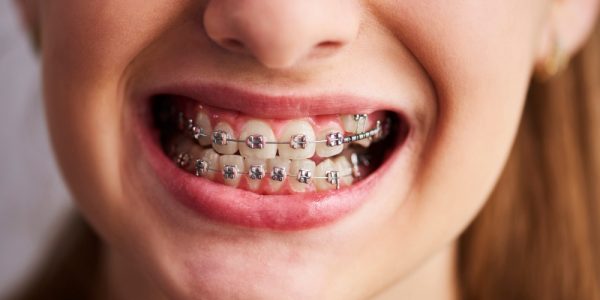

Metal braces / Traditional braces
These are the metal brackets and wires that most people picture when they hear the word “braces.” However, modern brackets are smaller and less noticeable than the notorious “metal-mouth” braces that many adults remember. Plus, new heat-activated archwires use your body heat to help teeth move more quickly and less painfully than in the past.
Pros: Least expensive type; colored bands give kids a chance to express themselves
Cons:Most noticeable type of braces
Ceramic Braces
Ceramic braces are the same size and shape as metal braces, except that they have tooth-colored or clear brackets that blend in to teeth. Some even use tooth-colored wires to be even less noticeable.
Pros: Less noticeable than metal braces; move teeth much faster than clear plastic aligners (Invisalign)
Cons:More expensive than metal braces; Brackets can stain easily if patients don’t care for them well.
Lingual Braces
Lingual braces are the same as traditional metal braces, except that the brackets and wires are placed on the inside of teeth.
Pros:Invisible from outside
Cons:Difficult to clean; more expensive; not appropriate for severe cases; can be more uncomfortable at first; regular adjustments take longer and are more difficult than with traditional braces .
INVISALIGN
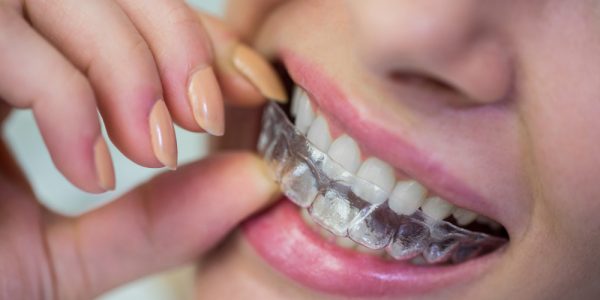
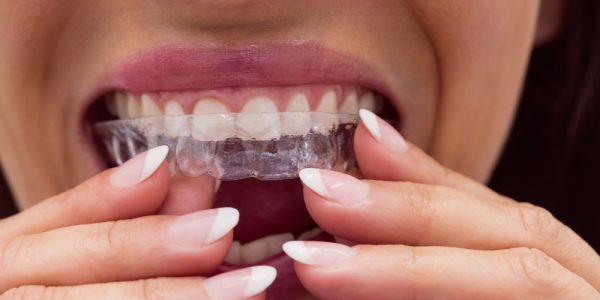
Invisalign is the invisible way to straighten teeth without braces. Invisalign uses a series of clear, removable aligners to gradually straighten teeth, without metal or wires. Invisalign uses 3-D computer imaging technology to depict the complete treatment plan from the initial position to the final desired position from which a series of custom-made, clear “aligners” are produced. Each “aligner” moves teeth incrementally and is worn for about two weeks, then is replaced by the next in the series until the final position is achieved.
Invisalign is clear. You can straighten your teeth without anyone knowing.
Invisalign is removable. Unlike braces, you can eat and drink what you want during treatment. You can also brush and floss normally to maintain good oral hygiene. Invisalign is comfortable. There are no metal brackets or wires as with braces to cause mouth irritation, and no metal or wires means you spend less time in the doctor’s chair getting adjustments. Invisalign allows you to view your own virtual treatment plan before you start so you can see how your straight teeth will look when your treatment is complete.